Key Features Every Development Rights Trading Platform Must Deliver

India’s TDR policy framework is well established. The NITI Aayog TDR guidelines recognise Transferable Development Rights as a primary instrument under the Value Capture Finance framework. Cities like Mumbai, Pune, Hyderabad, and Ahmedabad actively issue Development Rights Certificates to landowners who surrender land for roads, parks, and public infrastructure.

The policy is sound. The systems running it are not.

Most Municipal Corporations still manage TDR through paper certificates, manual registers, and broker networks. A development rights trading platform replaces this with a digital, regulated, and auditable system that covers every stage of the TDR lifecycle.

Here, we have discussed the features that define a capable development rights trading platform. Municipal Corporations, Urban Development Authorities, and Smart City Mission teams can use it as a checklist when evaluating or mandating an e-TDR solution.

Forged Certificates Cost Cities Crores. Blockchain Stops That.

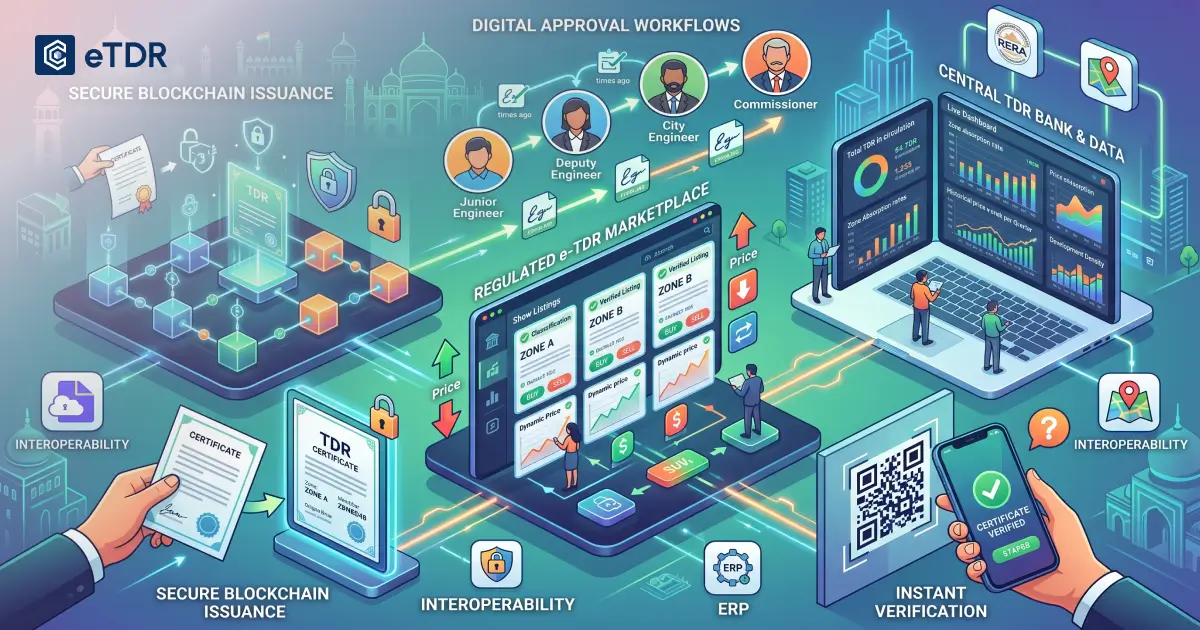
Every development rights trading platform begins with how it issues certificates. Paper-based Development Rights Certificates are vulnerable to forgery, duplication, and parallel submissions to multiple authorities. A digital platform eliminates this risk at the point of issuance.

What blockchain-anchored issuance delivers

  • Each TDR certificate is issued as a cryptographically signed digital credential with a unique identifier
  • The certificate is permanently recorded on the blockchain the moment it receives final approval
  • No individual, including the issuing officer, can alter a certificate after issuance
  • The certificate links directly to verified land parcel data, area measurements, and supporting documents

This is the foundational layer of any development rights certificate management system. Without tamper-proof issuance, every downstream feature loses credibility.

The File That Sits on a Desk for Weeks Now Moves in Minutes

TDR certificate issuance in most cities follows a multi-level approval chain. A Junior Engineer verifies site data. A Deputy Engineer reviews it. A City Engineer signs off. The Commissioner grants final approval. On paper, each handoff adds days or weeks.

A development rights trading platform digitises this entire workflow.

What digital approval workflows deliver

  • Role-based access ensures each officer sees only the actions assigned to their level
  • E-signatures replace physical sign-offs at every approval stage
  • The system sends automatic reminders for pending tasks and flags delays
  • Every approval, rejection, and modification is logged with a timestamp and officer identity

This removes the dependency on physical file movement between departments. The TDR certificate progresses through the approval chain inside the platform, visible to all authorised parties at every step.

Brokers Set TDR Prices in the Dark. A Regulated Marketplace Fixes That.

In paper-based TDR markets, pricing is opaque. Transactions happen through brokers. No published price data exists. Landowners consistently receive below-market rates. Developers overpay because they cannot compare prices across zones.

The World Bank has identified transparent TDR markets as essential for development rights to function as effective urban infrastructure finance. A development rights trading platform solves this through a regulated digital marketplace.

What a regulated e-TDR marketplace delivers

  • DRC holders list certificates with verified details, zone classification, and asking price
  • Developers search available certificates by zone, area, and price range
  • Every completed transaction creates a permanent, published price record
  • Compliance checks run automatically before any transfer is approved

An online TDR marketplace removes the dependency on intermediaries and gives both buyers and sellers direct access to the same market data.

City Planners Are Making Density Decisions Without Density Data

A Municipal Commissioner who asks “how much TDR is currently in circulation?” cannot get an accurate answer from paper registers without days of manual reconciliation. This is a planning failure with real infrastructure consequences. Zones receive more construction than water, electricity, and transport systems can support.

What a central TDR bank delivers

  • A live dashboard showing total TDR issued, transferred, utilised, and blocked across the entire city
  • Zone-level data showing which receiving areas are absorbing high TDR volume
  • Historical transaction data that reveals pricing trends and market activity per quarter
  • Exportable reports for commissioners and planning committees

This data layer is what separates a digital record-keeping system from a genuine e-TDR platform. It gives city planners real-time visibility into development density, directly addressing the transparency gap in urban land processes.

Verifying a Certificate Should Take Seconds, Not Office Visits

When a developer submits a building application with a TDR component, a municipal officer must verify the certificate. In paper systems, this means a physical file check. It takes days. It delays building approvals. It costs the developer and the city both time and money.

What instant verification delivers

  • Any authorised party can verify a TDR certificate digitally using a QR code or unique certificate ID
  • Banks processing loans against TDR holdings can confirm authenticity in real time
  • Courts reviewing disputed certificates access the complete provenance record instantly
  • Building permission departments confirm e-TDR validity without manual cross-checks

This single feature saves thousands of administrative hours per year for a city the size of Mumbai or Pune.

A Platform That Cannot Talk to DigiLocker or RERA Is Already Outdated

The National Urban Digital Mission requires Urban Local Bodies to meet open data and interoperability standards. An e-TDR platform that operates in isolation cannot meet these requirements.

What interoperability delivers

  • Certificates issued as W3C Verifiable Credentials can be stored in DigiLocker
  • RERA filings that require TDR documentation link directly to verified digital credentials
  • GIS integration maps all TDR-linked land parcels with zone classification and area details
  • Municipal ERP systems receive structured data from the e-TDR platform without manual re-entry

Smart City TDR platform that meets these standards also enables cross-authority compatibility. An e-TDR certificate issued by one municipal body can be verified and accepted by any other authority in the country.

If It Is Not on the Audit Trail, It Did Not Happen

RTI applicants, CAG auditors, and courts need a complete account of every TDR issuance, transfer, and utilisation. Paper registers cannot provide this without weeks of manual preparation.

What an immutable audit trail delivers

  • Every officer action, approval, rejection, and transfer is permanently logged on the blockchain
  • The full ownership history of any certificate is available in one view
  • Provenance tracking shows who issued, held, transferred, and utilised each TDR certificate
  • Audit-ready records require no manual preparation before submission

This is the operational definition of Electronic Transferable Development Rights done correctly. The record is complete, permanent, and available on demand.

What EveryCRED eTDR Brings to the Table

We built EveryCRED eTDR to deliver every feature outlined above as a single, integrated platform for Municipal Corporations and Urban Development Authorities.

Our e-TDR platform covers blockchain-anchored DRC issuance, multi-level approval workflows with e-signatures, a regulated marketplace with transparent pricing, a central TDR bank with real-time dashboards, instant QR-based verification, and full interoperability with DigiLocker, RERA, and GIS systems.

We configure the platform for your city’s specific regulatory context, zone structure, and existing workflows. No replacement of existing systems is required.

If your organisation is evaluating a development rights trading platform, request a demo to see how EveryCRED eTDR works in practice.

Conclusion

TDR is one of India’s most effective instruments for funding urban infrastructure without heavy cash payouts. The features of the platform that manages it determine whether TDR functions as intended or fails at scale.

Municipal Corporations and Urban Development Authorities evaluating an e-TDR solution should measure it against the capabilities listed here: tamper-proof issuance, digital approvals, transparent marketplace, real-time data, instant verification, interoperability, and a complete audit trail.

The platform is the delivery mechanism for the policy. The right features make the difference between a TDR system that works on paper and one that works in practice.
Smart City TDR Platform Explained: What India’s Urban Planners and Developers Need to Know

India’s cities are building roads, parks, drainage systems, and public infrastructure at a pace that demands a faster approach to land acquisition. The Smart Cities Mission has pushed 100 cities toward technology-led urban administration. The National Urban Digital Mission is extending digital infrastructure to over 4,800 urban local bodies. Land records are being digitised at the national level through DILRMP. 

Yet Transferable Development Rights, one of the most widely used tools for government land acquisition, still runs on paper in most Indian cities. That gap matters. A dedicated smart city TDR platform is what bridges it. 

TDR Is Still Failing Cities That Have Gone Digital 

City governments have successfully digitised property tax, water billing, and grievance systems. TDR management has not kept pace. The consequences show up across every stakeholder in the process. 

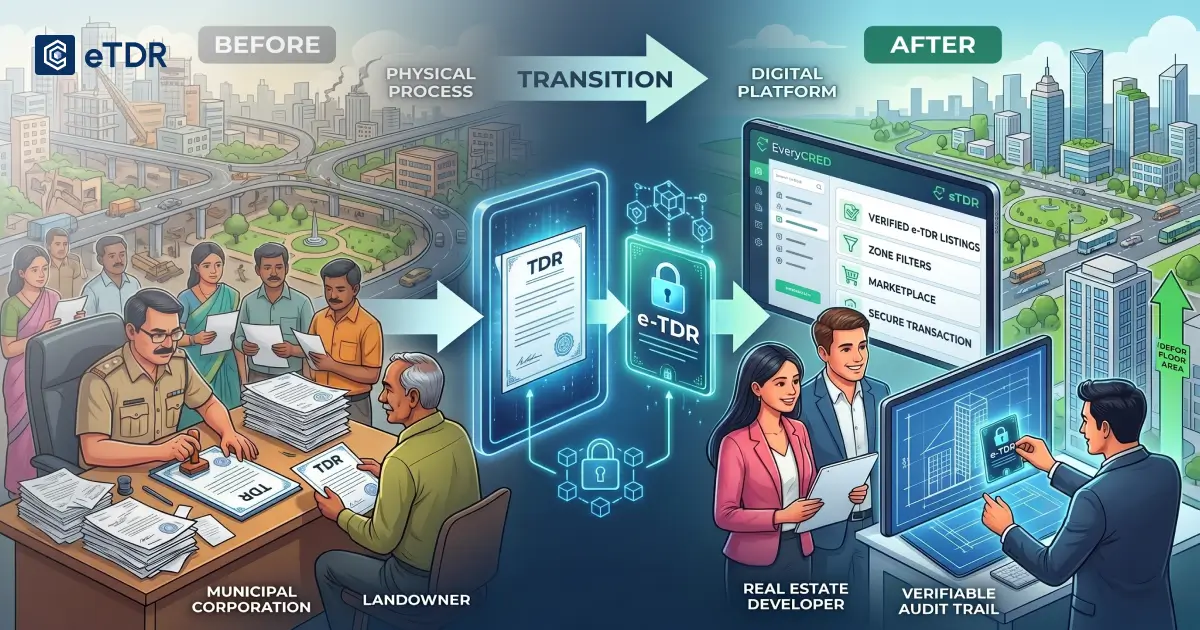
Development Rights Certificates (DRCs) issued on paper can be forged, duplicated, and sold to multiple buyers. Pricing is set privately through broker networks with no public visibility. Municipal officers verify TDR holdings by cross-checking physical files, a task that can take days or weeks. City planners have no reliable data on how much TDR has been issued, transferred, or consumed across zones. 

These are not administrative inefficiencies that better staff management can fix. They are structural failures that slow infrastructure delivery, distort land markets, and reduce public trust in the urban planning process. 

Understanding what TDR is makes it immediately clear why managing it digitally is not optional for cities with serious infrastructure pipelines. 

What “Smart City Ready” Actually Means for a TDR Platform 

A smart city TDR platform is not a scanned version of a paper process. It is a live, connected system that gives every participant in the TDR ecosystem, from the issuing officer to the developer using DRCs in a building approval, accurate information at the right moment. 

A platform qualifies as smart city-ready when it does the following: 

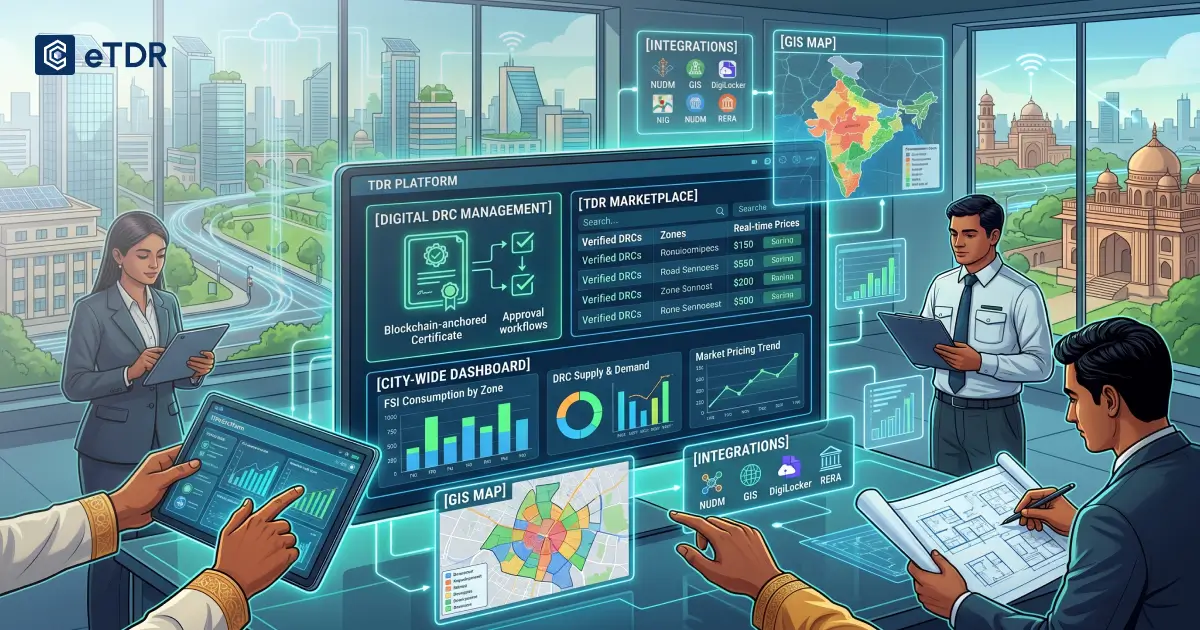
  • Issue DRCs digitally with multi-level approval workflows and e-signatures at each stage 
  • Anchors every certificate on blockchain, making records tamper-proof and permanently traceable 
  • Operates a regulated digital marketplace where landowners and developers transact directly 
  • Automates TDR verification during building approvals, including zone eligibility checks and utilisation deductions 
  • Provides real-time dashboards showing DRC supply, market pricing, and FSI consumption by zone 
  • Integrates with GIS systems, RERA portals, DigiLocker, and municipal ERP software 
  • Supports inter-city and inter-state certificate recognition, so a DRC issued by one authority is verifiable by another 

How this works in practice across the roles of issuer, seller, and buyer follows a structured and fully auditable sequence on a well-built e-TDR system. 

The Four Groups That a TDR Platform Must Actually Serve 

Every TDR transaction involves multiple parties. A platform built for only one of them creates friction for the others. 

  1. Municipal Corporations and Urban Development Authorities

These bodies issue DRCs when landowners surrender land for public projects. On a smart city TDR platform: 

  • Issuance is digital, with automatic blockchain anchoring on final approval 
  • Every action, from land identification to certificate issuance, is timestamped and auditable 
  • A central dashboard gives administrators a live view of all issued, active, transferred, and utilised TDR in the city 

Cities managing digital TDR at scale gain direct operational control over the DRC lifecycle without relying on manual registers or physical files. 

  1. Smart City Mission Teams

Urban planning teams need reliable data to make decisions on density, zoning, and infrastructure investment. A smart city TDR platform gives them: 

  • Zone-level DRC supply and demand visibility 
  • Historical and current market pricing by receiving zone 
  • FSI consumption data broken down by area and approval type 
  • Early signals on which zones face supply shortfalls 
  1. Real Estate Developers

Developers need TDR to increase FSI on their projects. On a digital marketplace, they can browse verified DRC listings by zone and area, purchase directly without broker involvement, and receive automatic TDR verification during building plan submissions. 

For a clear explanation of how to access and transact on the market, selling TDR online follows a structured process that removes the pricing opacity and delays that defined the paper-based system. 

  1. Landowners

Landowners who surrender land receive DRCs as compensation. On an e-TDR platform, they list certificates directly, set an asking price, and track offers in real time, without depending on brokers or navigating informal markets. 

India’s Digital Governance Framework Already Points Here 

The policy environment in India is designed to support this kind of platform. 

The National Urban Digital Mission (NUDM), launched in 2021 by the Ministry of Housing and Urban Affairs, aims to build shared digital infrastructure across all urban local bodies. It promotes open, interoperable platforms for municipal services, from property tax to building approvals, working across three pillars: people, process, and platforms. 

A smart city TDR platform built on open standards connects directly to this infrastructure. It integrates with the same tools cities are already building: Aadhaar-linked identity, DigiLocker for verified document access, and RERA for real estate compliance. The technical architecture of an end-to-end e-TDR platform is designed to fit within this national digital stack, not sit outside it. 

The Data Layer Is What Changes Urban Planning Decisions 

The most important feature of an e-TDR platform is not the transaction system. It is the data that the platform generates. 

When TDR runs on paper, planning departments have no reliable aggregate view of the market. Decisions on zoning, density, and infrastructure budgeting happen without knowing how much TDR has been issued, where it is concentrated, or at what prices it is trading. 

On a smart city TDR platform, planning teams can access: 

  • Total DRC area issued versus total utilised, citywide and by zone 
  • Current market pricing trends for TDR across receiving zones 
  • Which zones face supply shortfalls relative to development demand 
  • The rate at which issued certificates are moving through the market into building approvals 

This data directly supports decisions on where to allow higher density, how much infrastructure the city can fund through TDR, and whether the current policy is producing its intended outcomes. Understanding e-TDR as a connected system, rather than a certificate format, clarifies why the data layer is as important as the transaction layer. 

EveryCRED eTDR is Built for Cities That Need This to Work 

We built the EveryCRED e-TDR platform for Municipal Corporations, Urban Development Authorities, and Smart City Mission teams that are ready to run a live digital TDR program, not a pilot. 

Here is what the platform delivers: 

  • Full DRC lifecycle management from issuance through transfer, utilisation, and verification 
  • Blockchain-backed certificates built on W3C Verifiable Credentials, ensuring records that cannot be altered or duplicated 
  • A regulated digital marketplace where DRC holders and developers transact directly, with full pricing transparency 
  • Automated building approval integration for real-time TDR verification, reducing approval timelines from weeks to seconds 
  • Real-time dashboards for administrators and planning officials, covering supply, demand, pricing, and FSI consumption 
  • Integration with DigiLocker, RERA, GIS systems, and existing municipal ERPs 
  • Inter-city and inter-state interoperability, so a DRC issued by one authority is accepted by another 
  • Multi-level approval workflows with e-signatures, from Junior Engineer to Commissioner 

We configure the platform to your city’s regulatory framework, zone structure, and existing workflows. No new IT department. No system overhaul. Your team brings the mandate. We bring the platform. 

If your organisation is currently managing TDR through paper certificates, manual registries, or disconnected systems, reach out to us. We will walk you through what a fully operational smart city TDR program looks like in practice. 

Conclusion 

India has the policy direction, the digital infrastructure, and the governance mandate to transform how cities manage Transferable Development Rights. The Smart Cities Mission, NUDM, and DILRMP have established the foundation. What has been missing is a purpose-built smart city TDR platform that connects issuance, trading, verification, and planning data into a single, auditable system. 

That platform exists. The question now is adoption. Mumbai has already adopted it. 

Cities that digitise TDR management gain faster land acquisition, fraud-proof certificates, transparent DRC markets, and the planning data they need to make better decisions. Those that continue on paper will continue to face the same delays, disputes, and opacity that have limited TDR’s effectiveness for decades. 

India’s Urban Infrastructure Is Shifting to an Online TDR Marketplace

Urban expansion requires continuous land acquisition. Local governments must acquire privately owned land to build roads, parks, and public facilities. Paying cash compensation often strains municipal budgets. Authorities issue Transferable Development Rights (TDR) to solve this problem. These rights function as alternative compensation. They allow property owners to build additional floor space on their remaining property. Owners can also sell these rights to real estate developers. 

The traditional management system relies entirely on physical paper certificates. This manual process creates long delays. It complicates verification procedures for municipal staff. It also exposes the system to forgery and lost documents. An online TDR marketplace changes this administrative process. It converts physical certificates into digital e-TDR units. This dedicated platform connects municipal corporations directly with real estate developers. The digital environment removes the need for physical intermediaries. It standardizes the trading process across different urban zones. 

The Anatomy of a Digital Land Rights Exchange 

An online TDR marketplace functions as a central registry and a secure trading platform. It removes physical paperwork from the land acquisition and real estate development process. The system operates on direct digital inputs and automated verifications. 

  • Certificate Generation: Municipal authorities complete the physical land acquisition. Authorized officials log into the portal. They enter the specific land dimensions and zone categories. The system automatically generates the digital development rights. 
  • Asset Listing: Landowners receive access to their digital accounts. They view their verified development rights. They list their available rights on the public portal for prospective buyers to review. 
  • Market Discovery: Real estate developers need additional floor space index for their projects. They access the online TDR marketplace. They filter available rights by zone, size, and price. Developers evaluate the fundamental variations in building allowances to ensure the rights apply to their specific project zones. 
  • Transaction Execution: The buyer and seller agree on the terms. They execute the transfer through the platform. The system updates the central registry immediately to reflect the new ownership. 

The Lifecycle of a Digital Right from Generation to Consumption 

Understanding the exact movement of an e-TDR clarifies the system’s efficiency. The process follows a strict linear path defined by municipal regulations. 

  • Initiation: The property owner surrenders land to the Urban Development Authority. The authority signs the physical surrender documents. 
  • Digitization: The municipal clerk inputs the surrender data into the database. The system issues the e-TDR to the citizen’s digital wallet. 
  • Holding Period: The citizen holds the digital asset securely. The asset cannot degrade or face destruction like a physical paper document. 
  • Transfer: A real estate developer purchases the right. The ownership transfers in the digital ledger. The original owner no longer has access to the digital asset. 
  • Utilization: The developer applies for building permissions. The developer submits the digital certificate to the municipal corporation to expand their building parameters. 
  • Retirement: The municipal corporation approves the building plan. The system marks the e-TDR as consumed. The asset is permanently retired and removed from public circulation. 

Municipal Corporations Standardize Land Acquisition 

Local governments face severe challenges in tracking physical development certificates. An online TDR marketplace provides Smart City Mission Teams and municipal bodies with real-time administrative oversight. 

  • Centralized Tracking: City planners monitor the exact volume of development rights issued across all city zones. They track how many rights actively circulate in the market at any given time. 
  • Fraud Prevention: Physical certificates allow for illicit duplicate submissions. Digital ledgers verify the unique identifier of every e-TDR. The system automatically blocks any attempt to reuse a consumed certificate. 
  • Value Capture Integration: The national guidelines on urban development funding from NITI Aayog emphasize using these rights for infrastructure financing. Digitization makes this financing method accountable and measurable for government auditors. 
  • Smart City Mandates: Implementing a digital infrastructure framework aligns local governance with national technology directives. It creates a data-driven environment for urban planning. 

This shift enables municipal bodies to manage urban density with exact precision. They rely on concrete data rather than manual estimations. 

Real Estate Developers Secure Verified Approvals 

Developers require reliable sources for additional building rights to maximize their project scale. The physical certificate system involves manual verification steps that delay project timelines by months. 

  • Instant Verification: Developers check the authenticity of a certificate instantly on the platform. The system queries the municipal database to confirm the asset remains valid and unconsumed. 
  • Direct Procurement: Buyers negotiate and purchase directly from verified sellers. The online TDR marketplace eliminates unregulated brokers and opaque pricing structures from the procurement process. 
  • Project Certainty: Clear visibility into available rights allows developers to plan high-density commercial and residential projects with total certainty. They secure the exact square footage required before beginning construction. 
  • Approval Efficiency: The operational advantages for city planning extend directly to private developers. Verified digital certificates move through the building approval process faster than physical documents. 

An online TDR marketplace creates a highly predictable procurement cycle for real estate firms operating in dense urban centers. 

Transitioning Physical Assets to Digital Formats 

Paper certificates deteriorate over time. They get lost in municipal archives. They face constant counterfeiting risks. Converting these physical documents into an e-TDR format secures the municipal asset base. 

  • Data Migration: Administrative teams input existing physical certificate details into the new municipal database. They scan the original documents for the permanent archive. 
  • Owner Authentication: The system verifies the identity of the original land owner using national identity databases. This ensures the digital asset goes to the correct legal entity. 
  • Digital Issuance: The platform generates a secure digital asset. It links this unit directly to the authenticated owner’s profile. 
  • National Standardization: The Ministry of Housing and Urban Affairs drives the push for digitization in urban infrastructure to standardize land records across all states. 

This structured conversion process addresses the immediate requirement for Indian municipalities to audit and secure their historical land records. 

Infrastructure Requirements for the Trading Portal 

Building a functional online TDR marketplace requires specific technical foundations. The software must handle highly sensitive government data. It must also process high-value financial transactions without failure. 

  • Role-Based Access: The system requires distinct login protocols. Government officials, landowners, and developers require different permission levels within the portal to maintain security. 
  • Immutable Ledgers: A verifiable registry tracks every single change in ownership. Once a transaction occurs, the record cannot undergo alteration or deletion by any user. 
  • Automated Zoning Calculations: The platform calculates the exact square footage available based on complex, zone-specific municipal regulations. 
  • Secure Data Transfers: Implementing a standardized electronic transfer protocol ensures complete data integrity during the handover between buyer and seller. 

The technical architecture supports concurrent users during high-demand periods. It maintains uptime during peak real estate transaction seasons. 

Implementing Verifiable Digital Infrastructure 

EveryCRED eTDR provides a verifiable credential system for municipal corporations and urban development authorities. Our platform digitizes paper certificates into cryptographically secure e-TDR units. It establishes an online TDR marketplace where real estate developers verify and acquire rights directly.  

EveryCRED integrates with existing municipal databases to track the generation, transfer, and consumption of development rights in real time. The system prevents duplicate usage. It maintains a clear, automated audit trail for government oversight. Municipalities use this system to transition away from physical document management and establish strict control over their development rights inventory. 

Contact us now for a demo. 

The Future of Urban Density Management 

Indian cities require efficient land acquisition methods to build the necessary public infrastructure. Transferable Development Rights facilitate this process without depleting municipal funds. Moving this system to an online TDR marketplace eliminates manual errors. It accelerates real estate approvals.  

Urban planners maintain exact records of urban density and land use. Real estate developers access the building rights they need without administrative delays. Digitizing these assets into e-TDR formats creates a functional and transparent environment for organized city growth. The transition from paper to digital platforms secures the integrity of urban development across the country. 

Digital TDR System for Smart Cities

0Municipal corporations across India are changing how they manage land acquisition. Urban development requires space for roads, parks, and civic amenities. Governments issue Transferable Development Rights as compensation when they acquire private land.  

A Transferable Development Right or TDR allows the landowner to build additional areas on another plot or sell the right to a real estate developer. Historically, municipal bodies issued physical certificates.  

Today, urban planners use a digital TDR system to track these transactions. The transition to an e-TDR environment removes physical paperwork. It provides a secure database for municipal corporations and real estate developers. 

Legacy Development Rights Systems Create Administrative Delays 

Government departments struggle to maintain accurate physical ledgers. Paper certificates require manual verification. This process consumes administrative hours. Real estate developers experience delays when they purchase or apply these rights. 

Administrative Bottlenecks 

  • City planners spend weeks authenticating physical documents. 
  • Manual ledgers increase the risk of duplicate certificate issuance. 
  • Property owners face long wait times to receive their compensation. 
  • Developers cannot easily verify the legal status of a certificate. 

The Demand for System Updates 

Municipal bodies require faster verification methods. Smart city initiatives depend on rapid infrastructure development. A digital TDR system solves these administrative bottlenecks. It places the entire lifecycle of a certificate into an online database. 

National Policy Directs Municipalities Toward Technology Integration 

The central government encourages cities to update their land valuation methods. Accurate land value capture funds public infrastructure. NITI Aayog guidelines outline the necessary steps for cities to monetize urban land effectively. The government views TDR as a primary tool for urban expansion. 

Policy Directives for Urban Growth 

  • The central government advises states to digitize property records. 
  • Policies mandate clear compensation rules for land acquisition. 
  • Smart City Mission teams use digital tools to manage urban densification. 

Urban planners must follow these guidelines to access federal funding. An e-TDR platform ensures compliance with national standards. It records every issuance and transfer in a central repository. 

How a Digital TDR System Functions for Smart Cities 

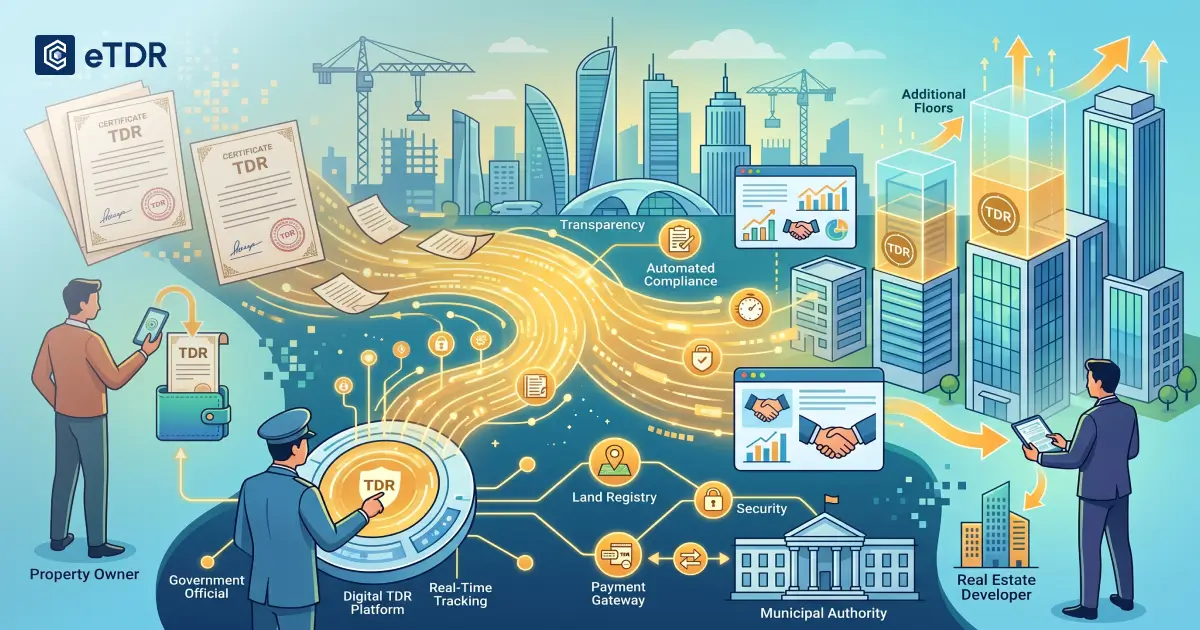
A digital TDR system connects property owners, developers, and government officials on a single platform. The software automates the issuance process. 

Centralized Certificate Generation 

  • The municipal authority approves the land acquisition request. 
  • The software calculates the exact square footage owed to the owner. 
  • The system generates an electronic certificate. 
  • The property owner receives the certificate in a secure digital wallet. 

Transaction and Transfer Protocols 

Property owners sell these certificates to builders. The platform records this sale. It updates the ownership details immediately. Real estate developers use the platform to surrender the certificate to the government. The government approves the additional building height. You can observe how these specific automated compliance protocols secure the entire process from fraud. 

Mumbai BMC Proves the Feasibility of Online Platforms 

Large municipal corporations are currently deploying these systems. The Brihanmumbai Municipal Corporation recently launched an online portal for development rights. The Mumbai e-TDR platform launch requires users to complete mandatory Know Your Customer protocols. 

Security Measures in Active Use 

  • The platform verifies the identity of all buyers and sellers. 
  • The system generates digital contract notes for every transaction. 
  • Municipal officials monitor the market prices in real time. 

Other Indian cities are evaluating this implementation. Urban development authorities recognize the benefits of a regulated online market. The e-TDR software prevents unauthorized individuals from altering records. 

Real Estate Developers Benefit from Transparent Markets 

Real estate developers need a consistent supply of development rights to execute large projects. An opaque market limits their ability to plan construction. A digital TDR system creates a transparent marketplace. 

Improved Market Liquidity 

  • Developers view available certificates on a public or semi public board. 
  • Standardized contracts reduce legal disputes between buyers and sellers. 
  • Pricing data becomes accessible to authorized participants. 

Accelerated Project Timelines 

Developers complete their purchases faster. They submit the digital certificate to the planning department with one click. The software verifies the certificate instantly. The municipality grants the building permit without manual file reviews. This speed aligns with the current urban planning trends that emphasize rapid smart city development. 

Key Technological Requirements for e-TDR Infrastructure 

Municipal corporations must select software that meets strict security standards. The platform must handle high volumes of data. 

Database Architecture 

  • The system must use secure servers located within India. 
  • The database must record a timestamp for every user action. 
  • The architecture must support concurrent users during peak business hours. 

Integration Capabilities 

  • The software must connect to the state land registry database. 
  • The platform requires integration with government payment gateways. 
  • The system must link to the municipal building permission software. 

These technical requirements ensure the e-TDR environment remains stable. Authorities rely on this stability to govern smart city growth. 

The Implementation Roadmap for Urban Authorities 

Adopting a digital TDR system requires a structured approach. Municipalities cannot switch off the paper system overnight. They follow specific phases to deploy the software safely. 

Phase One Assessment and Digitization 

  • The authority audits all existing paper certificates. 
  • Data entry teams input the active records into the new database. 
  • Officials verify the accuracy of the digitized records. 

Phase Two Training and Deployment 

  • The municipality trains its town planning staff on the software. 
  • The authority conducts workshops for local real estate developers. 
  • The government launches the platform for new land acquisitions only. 

Phase Three Full Integration 

  • The authority phases out the acceptance of paper certificates. 
  • All secondary market transfers occur exclusively on the platform. 
  • The system generates automated reports for the municipal commissioner. 

Government Officials Gain Complete Oversight of Urban Density 

City leaders need accurate data to manage infrastructure loads. A sudden concentration of building projects strains local water and electricity grids. A digital TDR system gives officials a clear view of where developers apply their rights. 

Real Time Zoning Reports 

  • Planners see exactly which city wards receive the most development applications. 
  • The software flags areas approaching their maximum structural density. 
  • The municipality can temporarily halt the application of rights in overloaded zones. 

Revenue and Taxation Audits 

  • The system calculates the exact transfer fees owed to the municipal corporation. 
  • Finance departments reconcile payments daily. 
  • Auditors review the digital logs to ensure total financial compliance. 

This oversight prevents haphazard development. It allows smart city mission teams to direct growth toward supported areas. 

Secure Urban Development with EveryCRED eTDR 

Municipal corporations require specialized technology partners to build these platforms. EveryCRED provides a comprehensive digital TDR system designed specifically for Indian urban development authorities. The platform digitizes the entire lifecycle of Development Rights Certificates. The EveryCRED e-TDR solution uses cryptographic security to issue tamper proof verifiable credentials directly to property owners. The system integrates smoothly with existing municipal portals. It features automated contract generation and real time market analytics. Government departments use the software to eliminate forged documents and reduce application processing times. The platform ensures complete transparency for both city planners and real estate developers. 

Conclusion 

Urban expansion requires efficient land acquisition and compensation methods. Legacy paper processes delay critical infrastructure projects. Municipal corporations must modernize their approach to development rights. A digital TDR system provides the necessary infrastructure for this modernization. The shift to an e-TDR platform eliminates manual errors and speeds up verification. Real estate developers gain access to a transparent marketplace. Government authorities maintain strict control over urban density and compliance. Indian smart cities will rely on these secure platforms to manage sustainable growth. The integration of this technology marks a fundamental improvement in municipal governance. 


What Is a TDR Management System and Why Indian Cities Need One Now

India’s cities are growing fast. Roads need widening. Parks need land. Drainage corridors, schools, and public utilities require private land that governments must acquire. Cash compensation slows this process down and drains public budgets. Transferable Development Rights offer a practical alternative. But issuing TDR certificates is only one part of the process. 

The infrastructure that governs every step, from land identification to certificate utilisation, is the TDR management system. This article explains what it is, what it must do, and why paper-based systems have failed the cities that rely on them. 

What a TDR Management System Actually Does 

A TDR management system is the administrative and technical infrastructure that manages the complete lifecycle of a TDR certificate. 

When a municipal authority identifies land for a public project, it issues a Development Rights Certificate (DRC) to the landowner who surrenders the land. That DRC represents FSI credit, which the holder can use on another plot or sell to a developer. Every step in this process, from issuance to transfer to utilisation, requires tracking, verification, and record-keeping. 

A functioning TDR management system handles: 

  • Certificate creation with verified land parcel data 
  • Multi-level approval workflows for authorised officers 
  • Ownership records from the first issuance onwards 
  • Transfer registration between landowners and developers 
  • FSI credit tracking against building approvals 
  • Real-time status visibility for all stakeholders 
  • Verification tools for courts, banks, and planning teams 

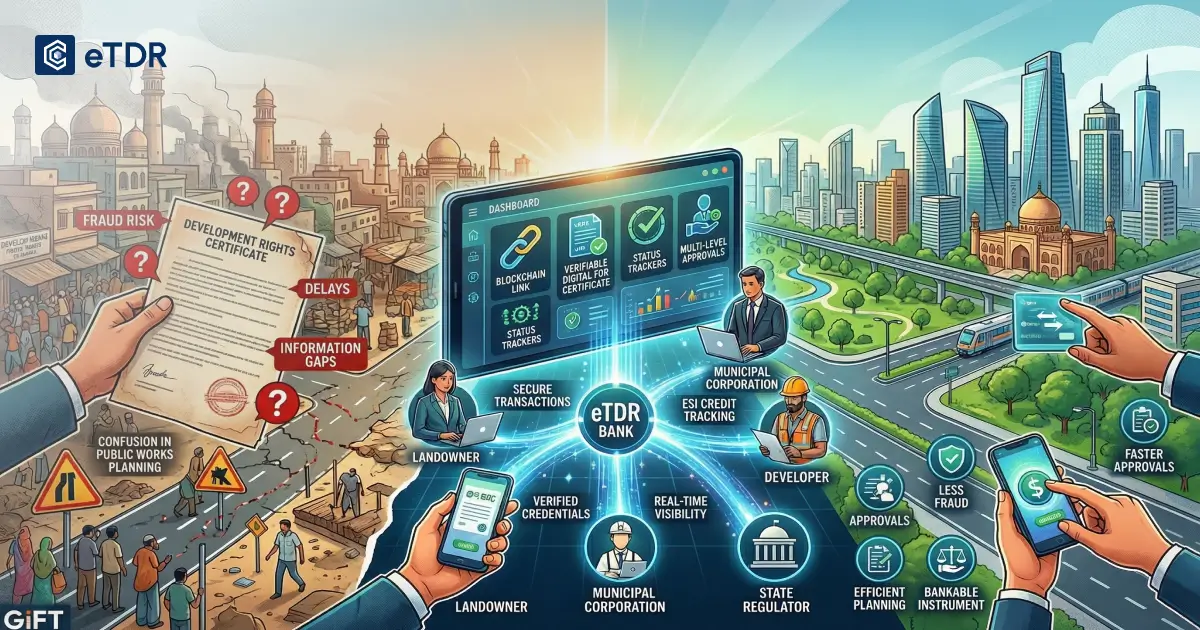
Without this infrastructure, each of these tasks becomes a manual exercise. Manual processes introduce delays, fraud risk, and information gaps that consistently undermine TDR as a policy tool. 

The Four Stakeholders Every TDR System Must Serve 

A TDR management system connects four distinct groups. Each has different needs from the system. 

Municipal Corporations and Urban Development Authorities 

They identify sending zones, verify land ownership, run approval workflows, and issue TDR certificates. They also monitor the total FSI credit in circulation across the city. Understanding how TDR works at each stage is essential for these bodies to manage urban growth effectively. 

Landowners 

They submit applications, receive TDR certificates, and decide whether to use or sell the certificate. They need secure digital storage, clear status visibility, and direct access to buyers without intermediaries. 

Real Estate Developers 

They purchase TDR certificates to unlock additional FSI on their receiving plots. They need verified, instantly transferable certificates and fast clearance at the building permission stage. 

State Governments and Regulators 

They set policy, define sending and receiving zones, and determine FSI multipliers through Development Control Regulations (DCR). They need oversight data on TDR supply and utilisation across urban jurisdictions. 

Each group depends on the others functioning within the same system. A well-built eTDR platform gives each stakeholder role-specific access to the same live data. 

Why Paper-Based TDR Management Has Held Indian Cities Back 

Most cities in India have managed TDR through paper certificates, physical registers, and manual verification. The failures of this approach are documented and structural. 

  • Fraud and forgery: Physical DRCs can be duplicated. Fraudulent certificates have been submitted in multiple building approvals simultaneously in several cities. 
  • No central registry: Without a unified record, no authority can confirm in real time how many certificates are active, transferred, or already utilised. 
  • Pricing controlled by brokers: Landowners receive below-market rates because transaction data is not visible to them. Developers overpay because they have no way to compare prices. 
  • Slow verification: Confirming a paper DRC requires a municipal officer to manually cross-check physical files. This delays building approvals by days or weeks. 
  • Inaccessible for small holders: Individual landowners with small DRC holdings cannot navigate a broker-dependent, information-asymmetric market. 

The NITI Aayog TDR Guidelines (2021) explicitly note that a robust mechanism is required to enhance the commercial value of TDR certificates and prevent fraudulent transactions. Better administration alone cannot fix these problems. Paper is the problem. 

FSI, TDR, and the Data Gap Every City Planner Faces 

FSI is the ratio of built-up area to plot area. TDR allows a developer to exceed the base FSI in a receiving zone by applying a valid DRC. The difference between TDR and FSI is that FSI is fixed to one plot, while TDR is transferable across zones. 

This creates a real-time data challenge for city planners. At any point, a municipal body needs to know: 

  • Total FSI credits issued in each zone 
  • Credits available for purchase in the open market 
  • Credits transferred but not yet applied to a building 
  • Credits fully utilised in approved construction 

Without a live TDR management system tracking this data, planners cannot make informed decisions about development density or infrastructure capacity. Zones receive more construction than they can support. Infrastructure projects stall because TDR supply data does not reach the teams that need it. 

What a Digital TDR Management System Looks Like 

A digital TDR management system replaces paper certificates with blockchain-anchored digital credentials. It automates approvals, records every transaction with timestamps, and makes verification instant. 

The core components:

Issuance Module 

Officers create digital TDR certificates with parcel details, area measurements, and supporting documents. Multi-level e-signatures replace physical sign-offs. Each certificate receives a unique identifier and is permanently recorded on the blockchain. 

Digital TDR Bank 

A central repository that shows the current status of every certificate: pending, issued, transferred, utilised, or blocked. This gives city planners real-time visibility across the city’s full TDR supply. 

Marketplace 

A regulated platform where DRC holders list certificates and developers search by zone, area, and price. Transparent pricing eliminates broker dependency. Both sides of the transaction access the same live market data. 

Instant Verification Portal 

Developers, courts, and banks verify a certificate’s authenticity using a QR code or unique ID. No office visit or manual check is required. 

The World Bank has identified fraud prevention and market transparency as essential conditions for TDR to function as a bankable instrument in Indian cities. A digital e-TDR system is designed precisely to meet both conditions. 

The benefits of this shift are measurable: faster approvals, reduced fraud, lower transaction costs, and better planning data for municipal authorities and urban development teams. 

EveryCRED eTDR Is Built for India’s Municipal Corporations 

EveryCRED eTDR is a complete digital TDR management platform for municipal corporations, urban development authorities, and smart city mission teams. 

Platform capabilities: 

  • Digital certificate issuance with configurable multi-level approval workflows 
  • Blockchain anchoring of every TDR certificate at the point of issuance 
  • A central eTDR Bank with real-time status tracking across the entire city 
  • A regulated marketplace for transparent, compliant TDR transactions 
  • An interactive GIS-based city map with zone classifications and parcel data 
  • Instant verification via QR code or certificate ID for developers, courts, and banks 

The platform is built on W3C Verifiable Credentials standards. It integrates with DigiLocker, RERA portals, GIS systems, and municipal ERP software. Certificates issued by one municipal body are verifiable by any other authority through the same system, enabling cross-city compatibility. 

Municipal corporations and urban development authorities looking to replace manual TDR processes can explore the EveryCRED eTDR platform and request a working demo. 

The Moment Indian Cities Can No Longer Afford to Wait 

India’s urban population is projected to reach approximately 500 million by 2025 and continue climbing through the next decade. Infrastructure demand is accelerating at the same rate. 

A paper-based TDR management system cannot process land acquisition, issue certificates, and clear building approvals at this pace. An e-TDR system built on verifiable digital credentials and a transparent marketplace can. 

The policy framework already exists. NITI Aayog has issued national TDR guidelines. The Ministry of Housing and Urban Affairs includes TDR in its Value Capture Finance framework. TDR as an urban planning instrument has decades of proven use across Mumbai, Hyderabad, Pune, and Ahmedabad. The gap is in implementation. A modern TDR management system closes it. 

Cities that build this infrastructure now will process urban growth with fewer disputes, faster approvals, and better data in every planning decision they make. 

TDR vs FSI Explained: What Are the Main Differences?

Indian cities are expanding at an unprecedented rate. This rapid growth creates huge pressure on land and infrastructure. Municipal corporations struggle to acquire land for roads, parks, and public facilities while supporting real estate development.  

Two important mechanisms help address this challenge: TDR and FSI. Understanding the differences between TDR and FSI has become essential for urban planners, developers, and government officials.  

Here, we have explained how both tools work, their key differences, and the rising importance of e-TDR in transforming urban development across India. 

How FSI Determines Construction Limits on Individual Plots 

FSI stands for Floor Space Index. It defines the total built-up area that developers can construct on a plot relative to the plot area. Planning authorities set FSI values based on zoning regulations and master plans. 

For instance, an FSI of 2.0 on a 300 square meter plot permits up to 600 square meters of construction. FSI forms the foundation of development control. It directly affects project feasibility and building design.  

Authorities adjust FSI during master plan revisions to encourage higher density in well-connected areas. FSI remains tied to the specific plot and cannot be shifted elsewhere. 

TDR: Transferring Development Rights Across Different Zones 

TDR stands for Transferable Development Rights. When landowners surrender land reserved for public purposes, they receive a certificate for equivalent development rights. They can use this certificate or sell it to developers in designated receiving zones. 

TDR allows extra construction beyond normal limits in permitted areas. This mechanism helps governments acquire land without heavy cash compensation. Developers use TDR to increase the size of their projects. 

Read the fundamentals in our guide to TDR meaning. 

TDR vs FSI: Side-by-Side Comparison 

TDR and FSI operate differently, even though they are related. The following table highlights the major distinctions in TDR vs FSI: 

Aspect  FSI  TDR 
Definition  Ratio of built-up area to plot area  Tradable certificate for extra buildable area 
Land Attachment  Fixed to one plot  Transferable from the sending to the receiving zone 
Primary Purpose  Regulates development density  Compensates for public land acquisition 
Grant Process  Given development permission  Issued after land surrender 
Transferability  Not transferable  Fully transferable and marketable 
City Planning Role  Sets baseline rules for all projects  Provides flexible additional FSI 

This table shows the practical distinctions in TDR vs FSI. NITI Aayog has outlined comprehensive guidelines that present TDR as a practical solution for urban infrastructure development in India. 

Real Benefits of TDR for Government and Private Players 

TDR offers clear advantages to multiple stakeholders.  

  • Municipal corporations acquire land for essential projects at reduced direct cost.  
  • Urban development authorities achieve better planned growth.  
  • Real estate developers gain access to additional construction rights in prime locations.  
  • Smart City Mission teams implement projects more efficiently. 
  • Landowners also receive fair compensation through tradable certificates.  

Explore more about the benefits of a TDR platform in urban planning. 

Challenges in Traditional Paper-Based TDR Systems 

Many cities still follow manual TDR processes. These create long delays in certificate verification and approval. Tracking ownership and utilization becomes difficult. Developers face uncertainty in project planning. The risk of errors and disputes remains high. 

Such limitations slow down urban development significantly. 

How e-TDR Is Changing Urban Planning in India 

e-TDR digitizes the complete process. Platforms issue certificates quickly and store them securely. Online marketplaces allow the transparent buying and selling of TDR. Blockchain technology prevents duplication and fraud. Municipal teams monitor everything through real-time dashboards. 

See the practical process in our article on how TDR works in real estate projects. The Ministry of Housing and Urban Affairs encourages digital tools to bring more transparency and speed to urban governance. 

Who Benefits Most from e-TDR Adoption? 

Different groups gain specific advantages from e-TDR. Municipal Corporations get instant verification and audit support. Urban Development Authorities manage digital  

TDR banks efficiently. Smart City Mission Teams integrate e-TDR with other governance platforms. Real estate developers complete transactions faster with verified documents. 

e-TDR supports the national push toward paperless land and urban management. Learn more about modern solutions in our post on the electronic TDR platform. 

The Road Ahead for TDR, FSI, and Digital Urban Growth 

TDR and FSI will remain central to city planning in India. FSI sets the basic development limits while TDR brings necessary flexibility. e-TDR improves both systems with speed, security, and transparency. Cities adopting digital TDR management experience smoother coordination between public authorities and private developers. 

Municipal corporations and urban development authorities looking to modernize their TDR processes can consider EveryCRED eTDR. The platform provides instant certificate issuance, a secure marketplace, blockchain verification, and full tracking capabilities for all users. 

Final Words 

Understanding TDR vs FSI helps professionals make better decisions in urban planning and real estate. These tools together support balanced city growth. The shift to e-TDR represents a significant improvement in how Indian cities manage development rights. 

What Is an Electronic Transferable Development Rights Platform and Why Indian Cities Need One Now

India’s municipal corporations issue TDR certificates every year to landowners who surrender land for public use. Roads get widened. Drainage corridors get cleared. Parks and schools get the land they need. The policy has been in place for decades. The execution has been unreliable. 

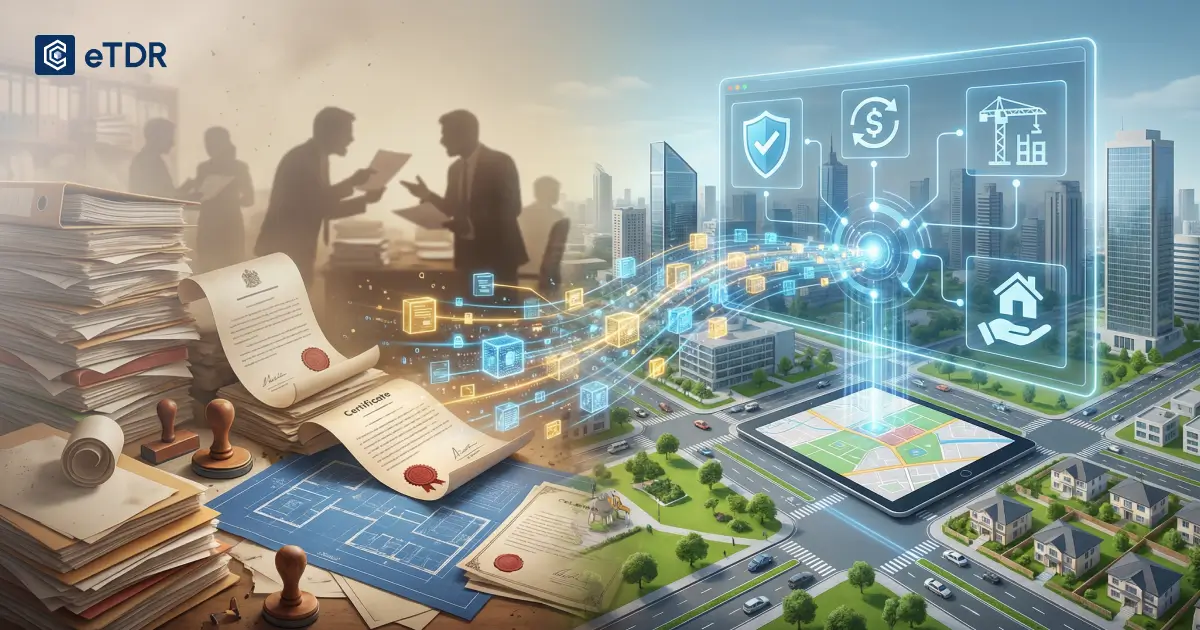
Paper certificates get forged. Pricing is negotiated by brokers, not set by market data. Verification requires office visits and manual cross-checks. Landowners receive below-market rates. Developers face weeks of approval delays. Civic bodies absorb the legal risk. 

An electronic transferable development rights platform addresses each of these problems at the system level. This article explains what the platform is, what it does, and why municipal corporations and urban development authorities across India are moving toward it now. 

TDR Has Been a Policy Priority for Years. The Paper Problem Has Not Gone Away. 

The Ministry of Housing and Urban Affairs included TDR in its Value Capture Finance Policy Framework in 2017. NITI Aayog published formal TDR guidelines in 2021 to give states and Urban Local Bodies a structured national framework. 

Cities including Mumbai, Hyderabad, Pune, Ahmedabad, and Bengaluru have active TDR programs. Each operates under its own Development Control Regulations governing sending zones, receiving zones, and FSI multipliers. 

Yet in most of these cities, the TDR certificate is still a paper document. Paper creates specific, structural problems: 

  • A physical DRC can be duplicated and sold to multiple buyers simultaneously 
  • No central registry exists to confirm whether a certificate has already been utilised 
  • Pricing is controlled by intermediaries, with no market transparency for landowners 
  • Manual verification delays building approvals by weeks or months 
  • Small landowners cannot access fair pricing in a broker-dependent market 

These are properties of the paper medium. Administrative improvements cannot fix them. 

What an Electronic Transferable Development Rights Platform Actually Does 

An electronic transferable development rights platform is a digital system that manages the full TDR lifecycle: issuance, transfer, marketplace trading, verification, and utilisation. It replaces paper certificates with blockchain-anchored digital credentials. 

Each certificate issued on the platform is: 

  • Cryptographically unique and impossible to duplicate 
  • Permanently recorded with a complete, timestamped audit trail 
  • Instantly verifiable by any authorised party using a QR code or unique ID 
  • Interoperable across government departments, registries, and GIS systems 

Understanding what eTDR is clarifies the distinction. e-TDR is the digital version of a TDR certificate. The electronic transferable development rights platform is the infrastructure that issues, transfers, and verifies those credentials end-to-end. 

The shift changes the process at every stage: 

  • Issuance: Officers create digital TDR certificates through a multi-level approval workflow with e-signatures at each stage 
  • Transfer: Every ownership change is recorded digitally from first issuance to final utilisation 
  • Verification: Courts, banks, and regulatory bodies verify certificate status in real time without visiting an office 
  • Marketplace: A regulated digital marketplace connects DRC holders with developers and displays live pricing data 
  • Reporting: Administrators access dashboards showing total TDR issued, available, transferred, and utilised across the entire city 

India’s Land Acquisition Gap Makes This More Than a Technology Decision 

India’s urban population is projected to reach 42% of the total population by 2030. Urban Local Bodies need land for roads, drainage, parks, schools, and public housing. Cash-based land acquisition is slow, legally contested, and costly at scale. 

TDR provides the alternative. Municipal authorities issue development rights in place of cash. Landowners receive real economic value. Developers gain additional FSI for their projects. No large cash outflow is required from the government budget. 

A World Bank analysis of India’s urban infrastructure financing confirms that TDR gives municipal authorities the flexibility to compensate landowners through Development Rights Certificates at market value without any actual cash outflow. The mechanism works. The delivery system has not kept up with demand. 

An electronic transferable development rights platform is how cities scale TDR without scaling the fraud, opacity, and delays that paper introduces. 

Four Types of TDR, One Unified Digital System 

TDR applies differently depending on the land type and the public purpose it serves. Municipal corporations and urban development authorities regularly work with four distinct categories: 

  • Road TDR: Issued when a landowner surrenders land for road widening or new road corridors 
  • Slum TDR: Issued under Slum Rehabilitation Authority schemes. The most widely used category in urban India 
  • Heritage TDR: Issued to owners of heritage structures who maintain and preserve protected buildings 
  • Reserved Plot TDR: Issued when land earmarked for parks, schools, or playgrounds is handed over to the civic body 

See the full breakdown of how TDR works in real estate projects across each of these types. An electronic transferable development rights platform manages all four categories within the same issuance, transfer, and verification system. Zone rules, FSI multipliers, and document references are configurable per city and per category. 

What Each Stakeholder Gains from the e-TDR Platform 

Every participant in the TDR ecosystem has a different operational requirement. The e-TDR platform addresses each one directly. 

Municipal Corporations 

  • Issue digital TDR certificates with built-in Jr. Engineer to Commissioner multi-level approval workflows 
  • Maintain a live TDR Bank showing all issued, available, transferred, and blocked certificates in real time 
  • Access city-wide dashboards for planning, reporting, and compliance monitoring 

Landowners 

  • Receive a verifiable digital credential stored in a secure digital wallet 
  • Track certificate balance and transfer history from a mobile or web portal 
  • List certificates on a regulated marketplace and transact without broker intermediaries 

Real Estate Developers 

  • Search and purchase TDR certificates filtered by zone, area, and price 
  • Verify authenticity before any transaction using a QR code or unique identifier 
  • Receive automated FSI checks during building approval, reducing multi-week processing to minutes 

Urban Development Authorities and State Governments 

  • Approve e-TDR frameworks and set policy parameters for their jurisdiction 
  • Monitor cross-authority TDR activity through a single oversight interface 
  • Access tamper-proof audit trails for compliance reviews and dispute resolution 

Review how the platform works in a live issuance and marketplace workflow. 

Three Government Programmes That Already Create the Mandate 

Municipal corporations adopting an electronic transferable development rights platform are following existing government policy direction, not getting ahead of it. 

DILRMP (Digital India Land Records Modernization Programme): Extended through 2025-26 with an outlay of Rs. 875 crore, the programme explicitly calls for blockchain, AI, and machine learning in land administration. As of 2024, 98.5% of rural land records have been digitised under this initiative. Urban land records, including TDR, are the next logical layer. 

National Blockchain Framework (NBF): Launched by MeitY in September 2024 with an initial budget of Rs. 64.76 crore, the NBF lists land records as a priority use case. The framework provides government-grade infrastructure for tamper-proof document issuance and verification across public services. 

National Urban Digital Mission (NUDM): MoHUA’s mandate for digital governance infrastructure across all Urban Local Bodies calls for citizen-centric, interoperable digital platforms. An e-TDR platform is a direct implementation of this mandate for land administration at the city level. 

The policy environment is aligned. The question for each ULB is timing and implementation, not direction. 

We offer the eTDR Solution 

Municipal corporations and urban development authorities evaluating how to digitise TDR management can explore the EveryCRED eTDR platform. The platform covers the complete eTDR process: digital certificate issuance, TDR Bank, regulated marketplace, instant verification, and GIS-integrated city map view.  

It is built on W3C Verifiable Credentials and integrates with DigiLocker, RERA portals, and GIS systems. Implementation does not require overhauling existing systems. Explore the platform or contact the EveryCRED team to discuss your city’s specific TDR regulations and zone structure. 

Paper TDR Has Structural Limits. An Electronic Platform Has a Clear Path Forward

TDR as an urban planning instrument works. Paper as the operating medium for TDR does not. Fraud, opaque pricing, and slow verification are outcomes of the system design, not failures of policy. 

An electronic transferable development rights platform changes the operating medium. Every certificate is digital. Every transfer is recorded. Every verification is instant. The land acquisition efficiency that TDR was designed to deliver becomes reachable when the underlying platform is built for transparency, accountability, and scale. 

Indian cities already have the policy framework. The platform is what makes it function in practice.