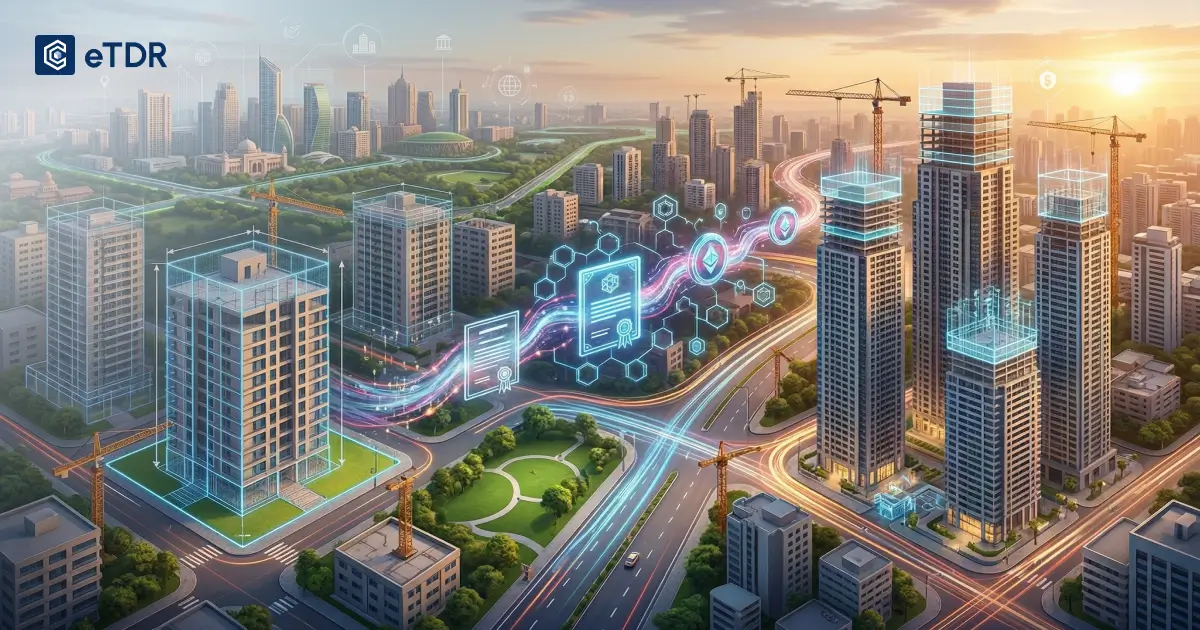
TDR vs FSI Explained: What Are the Main Differences?

Indian cities are expanding at an unprecedented rate. This rapid growth creates huge pressure on land and infrastructure. Municipal corporations struggle to acquire land for roads, parks, and public facilities while supporting real estate development.  

Two important mechanisms help address this challenge: TDR and FSI. Understanding the differences between TDR and FSI has become essential for urban planners, developers, and government officials.  

Here, we have explained how both tools work, their key differences, and the rising importance of e-TDR in transforming urban development across India. 

How FSI Determines Construction Limits on Individual Plots 

FSI stands for Floor Space Index. It defines the total built-up area that developers can construct on a plot relative to the plot area. Planning authorities set FSI values based on zoning regulations and master plans. 

For instance, an FSI of 2.0 on a 300 square meter plot permits up to 600 square meters of construction. FSI forms the foundation of development control. It directly affects project feasibility and building design.  

Authorities adjust FSI during master plan revisions to encourage higher density in well-connected areas. FSI remains tied to the specific plot and cannot be shifted elsewhere. 

TDR: Transferring Development Rights Across Different Zones 

TDR stands for Transferable Development Rights. When landowners surrender land reserved for public purposes, they receive a certificate for equivalent development rights. They can use this certificate or sell it to developers in designated receiving zones. 

TDR allows extra construction beyond normal limits in permitted areas. This mechanism helps governments acquire land without heavy cash compensation. Developers use TDR to increase the size of their projects. 

Read the fundamentals in our guide to TDR meaning. 

TDR vs FSI: Side-by-Side Comparison 

TDR and FSI operate differently, even though they are related. The following table highlights the major distinctions in TDR vs FSI: 

Aspect  FSI  TDR 
Definition  Ratio of built-up area to plot area  Tradable certificate for extra buildable area 
Land Attachment  Fixed to one plot  Transferable from the sending to the receiving zone 
Primary Purpose  Regulates development density  Compensates for public land acquisition 
Grant Process  Given development permission  Issued after land surrender 
Transferability  Not transferable  Fully transferable and marketable 
City Planning Role  Sets baseline rules for all projects  Provides flexible additional FSI 

This table shows the practical distinctions in TDR vs FSI. NITI Aayog has outlined comprehensive guidelines that present TDR as a practical solution for urban infrastructure development in India. 

Real Benefits of TDR for Government and Private Players 

TDR offers clear advantages to multiple stakeholders.  

  • Municipal corporations acquire land for essential projects at reduced direct cost.  
  • Urban development authorities achieve better planned growth.  
  • Real estate developers gain access to additional construction rights in prime locations.  
  • Smart City Mission teams implement projects more efficiently. 
  • Landowners also receive fair compensation through tradable certificates.  

Explore more about the benefits of a TDR platform in urban planning. 

Challenges in Traditional Paper-Based TDR Systems 

Many cities still follow manual TDR processes. These create long delays in certificate verification and approval. Tracking ownership and utilization becomes difficult. Developers face uncertainty in project planning. The risk of errors and disputes remains high. 

Such limitations slow down urban development significantly. 

How e-TDR Is Changing Urban Planning in India 

e-TDR digitizes the complete process. Platforms issue certificates quickly and store them securely. Online marketplaces allow the transparent buying and selling of TDR. Blockchain technology prevents duplication and fraud. Municipal teams monitor everything through real-time dashboards. 

See the practical process in our article on how TDR works in real estate projects. The Ministry of Housing and Urban Affairs encourages digital tools to bring more transparency and speed to urban governance. 

Who Benefits Most from e-TDR Adoption? 

Different groups gain specific advantages from e-TDR. Municipal Corporations get instant verification and audit support. Urban Development Authorities manage digital  

TDR banks efficiently. Smart City Mission Teams integrate e-TDR with other governance platforms. Real estate developers complete transactions faster with verified documents. 

e-TDR supports the national push toward paperless land and urban management. Learn more about modern solutions in our post on the electronic TDR platform. 

The Road Ahead for TDR, FSI, and Digital Urban Growth 

TDR and FSI will remain central to city planning in India. FSI sets the basic development limits while TDR brings necessary flexibility. e-TDR improves both systems with speed, security, and transparency. Cities adopting digital TDR management experience smoother coordination between public authorities and private developers. 

Municipal corporations and urban development authorities looking to modernize their TDR processes can consider EveryCRED eTDR. The platform provides instant certificate issuance, a secure marketplace, blockchain verification, and full tracking capabilities for all users. 

Final Words 

Understanding TDR vs FSI helps professionals make better decisions in urban planning and real estate. These tools together support balanced city growth. The shift to e-TDR represents a significant improvement in how Indian cities manage development rights. 

How TDR Works in Real Estate Projects and Why India Is Moving to Digital Management

India’s cities need land for roads, parks, schools, and public utilities. Acquiring that land is expensive and slow. Transferable Development Rights (TDR) give civic bodies a tool to obtain land without large cash payouts, while giving developers a legal path to build beyond standard floor space limits. 

Let’s show you how TDR works, the types in use across India, who gains from the process, why traditional systems have created persistent problems, and how e-TDR platforms are replacing them. 

What Is TDR and What Problem Does It Solve 

TDR is a legal mechanism that separates development rights from land ownership. 

When a civic body acquires private land for a public project, it compensates the landowner with a Development Rights Certificate (DRC). This DRC represents a certain amount of FSI (Floor Space Index) credit. The landowner can use this credit on another plot or sell it to a developer who needs additional building rights. 

The Ministry of Housing and Urban Affairs includes TDR as one of ten instruments in its Value Capture Finance framework, which guides how Urban Local Bodies fund infrastructure without direct government expenditure. 

TDR serves three direct purposes: 

  • Compensates landowners without requiring large government cash payments 
  • Allows civic bodies to acquire land for infrastructure with a lower financial burden 
  • Redirects development density to zones that have the infrastructure to support it 

How TDR Works: From Land Surrender to Construction Approval 

Understanding how TDR works means following the full transaction from land identification to building approval. 

Step 1: Zone Designation 

City master plans define two types of zones: 

  • Sending zones, where development is restricted (heritage sites, green reserves, road widening corridors) 
  • Receiving zones, where higher-density construction is permitted 

Step 2: Land Surrender 

A landowner in a sending zone surrenders the land to the civic authority for public use. The land must be free of encumbrances. 

Step 3: DRC Issuance 

The civic body issues a Development Rights Certificate specifying the FSI credit. This is calculated based on the surrendered plot area and the FSI applicable to that zone under the local Development Control Regulations (DCR). 

Step 4: TDR Sale 

The DRC is a negotiable instrument. The landowner can sell it to a developer. Pricing is market-driven, based on supply, demand, and location. 

Step 5: Developer Utilisation 

The developer registers the purchased TDR against a receiving plot. This allows construction beyond the base FSI limit set by local DCR rules. 

That is how TDR works at the process level. The mechanism is consistent across cities, though multipliers and zone designations vary by state. 

India’s Four Main Types of TDR, Explained 

TDR is not a single category. It applies differently based on the land type involved: 

  1. Road TDR: Issued when a landowner surrenders land for road widening. Common in cities undertaking large infrastructure corridor projects. 
  1. Slum TDR: Issued for land involved in Slum Rehabilitation Authority (SRA) approved projects. This is the most widely used type in urban construction across India. 
  1. Heritage TDR: Issued to owners of heritage structures who maintain and preserve the property in exchange for development rights. This protects historically significant buildings from demolition pressure. 
  1. Reserved Plots TDR: Issued when land earmarked for parks, playgrounds, or schools is surrendered to the civic body. 

State-level DCR frameworks govern which types apply in each city and what multipliers are used to calculate FSI credit. 

Who TDR Benefits and by How Much 

TDR creates measurable value for each stakeholder involved: 

Landowners 

They receive fair compensation through a DRC rather than a below-market cash payment from the government. They retain land title and can sell the rights for market-driven income. 

Real Estate Developers  

They gain additional FSI beyond the base limit. This allows larger, more financially viable projects on the same plot. Developers in Mumbai, Pune, and Hyderabad regularly integrate slum TDR into project planning to unlock additional buildable area without purchasing new land. 

Municipal Corporations and Urban Development Authorities 

TDR allows land acquisition for public infrastructure with a lower upfront cost. Processing fees on TDR transfers also contribute to municipal revenue. 

Smart City Mission Teams 

TDR directs urban density toward zones with existing infrastructure. This reduces pressure on areas that cannot yet support rapid population growth, which supports more balanced development planning. 

How Broker Networks Have Kept TDR Markets Closed and Opaque 

The traditional paper-based TDR system has clear and documented problems: 

  • Transfers happen informally through direct contacts or brokers, with no price transparency 
  • Broker networks control access to TDR inventory, which inflates transaction costs 
  • Paper certificates carry risks of duplication, loss, and fraudulent transfer 
  • Smaller stakeholders, including flat owners and housing societies, cannot access TDR without paying intermediary fees 
  • There is no central record of how many DRCs are in circulation at any given time 
  • Manual processing extends approval timelines, delaying project delivery for developers 

These barriers have reduced TDR adoption in cities where it could otherwise be used at a larger scale. 

Why Indian Cities Are Now Racing to Build Digital TDR Infrastructure 

Governance bodies are responding. In April 2025, Maharashtra inaugurated its first online TDR exchange, developed by the Brihanmumbai Municipal Corporation. The platform dematerialises all DRCs, routes financial transactions through the State Bank of India as the nodal bank, and gives individual flat owners and housing societies direct access to TDR without broker dependency. 

Hyderabad’s GHMC has offered double TDR for specific infrastructure-related acquisitions. GIS-mapped TDR data is already publicly available through MCGM’s portal in Mumbai. These are not isolated pilots. They reflect a national shift in how urban authorities think about e-TDR adoption as a governance standard. 

For developers, this means faster access to verified TDR inventory. For civic authorities, it means a visible and auditable record of all transactions. For urban planning teams, it means better data on density distribution across the city. 

The Verification Gap That a Digital Marketplace Alone Does Not Close 

A digital marketplace makes TDR more accessible. It does not, by itself, make TDR certificates tamper-proof or instantly verifiable. 

Paper DRCs can be replicated or fraudulently transferred. A standard listing system still relies on manual verification of certificate authenticity. This slows approval cycles and introduces risk for developers, lenders, and civic authorities who rely on TDR as a project input. 

The solution is to convert DRCs into verifiable credentials backed by decentralized identity standards. Each DRC becomes a cryptographically signed digital document tied to the issuing civic authority’s verified identity. Any stakeholder, including developers, lenders, or approving authorities, can confirm certificate authenticity in seconds without contacting the issuing office. 

This is how e-TDR works when built on a verifiable credential infrastructure. The certificate carries its own proof of validity. This is also how digital credentials are transforming public governance in India more broadly, and TDR management is a direct application of that shift. 

EveryCRED’s e-TDR Platform: Verified at Every Stage 

EveryCRED’s e-TDR platform applies Decentralized Identifiers (DID) and verifiable credentials to the complete TDR lifecycle. The platform is built for municipal corporations, urban development authorities, and real estate developers who manage TDR at scale. 

Key capabilities include: 

  • Cryptographically signed digital issuance of DRCs by civic authorities 
  • Instant verification of certificate authenticity for developers, lenders, and approving bodies 
  • Immutable audit logs for every transfer event 
  • Scalable deployment that works across cities with different DCR frameworks 

This removes manual cross-checking at every stage, reduces approval cycles, and creates a provable chain of custody from DRC issuance to utilisation. If your organisation is managing TDR through paper records or a basic digital listing, talk to the EveryCRED team to see how the platform works in your specific city context. 

Conclusion 

TDR is a tested urban planning instrument that benefits landowners, developers, and civic bodies when it functions correctly. Understanding how TDR works at the process level helps every stakeholder use it efficiently and compliantly. The shift from paper management to e-TDR systems is already happening across India’s major cities. The next step is ensuring that digital TDR certificates are verifiable and tamper-proof from the point of issuance, not just accessible on a marketplace. That is the difference between digitising a process and genuinely improving it.